PEA for Nerve Health: Micronized vs Ultramicronized Dosage
| What it is | Palmitoylethanolamide — a fatty-acid compound your body makes on its own, part of the ALIAmide family. |
| Why nerves | It supports the body's own regulation of comfort and calming responses in nerve tissue. |
| The key issue | PEA barely dissolves in water, so particle size decides how much you absorb. |
| On the label | Look for micronized or ultramicronized PEA, a clear mg figure and third-party testing. |
What PEA actually is
PEA for nerve health — short for palmitoylethanolamide — is one of the more interesting entries in the nerve-support world because, unlike most supplement ingredients, it is not foreign to the body at all. PEA is a fatty-acid amide your body makes on its own, and it produces more of it in tissues that are under stress. In other words, it is part of the body's own built-in balancing system rather than an outside substance you are introducing for the first time. Petrosino and Di Marzo describe that endogenous origin in the British Journal of Pharmacology (2017).
Chemically, PEA is built from palmitic acid (a common fatty acid) joined to ethanolamine. It is found in trace amounts in foods such as egg yolk, soybeans and peanuts, and it belongs to a family of compounds nicknamed ALIAmides. Before you buy, it is worth understanding what that family name means, why the particle size of a PEA supplement is the single most important thing on the label, and how it fits alongside more familiar nerve nutrients.
How PEA supports nerve tissue: the ALIAmide idea
The nickname ALIAmide stands for "autacoid local injury antagonist amide," which is a mouthful, so here is the plain-English version. An autacoid is a substance the body releases locally, right where it is needed, to help manage a situation — a kind of on-the-spot signalling molecule. PEA behaves like one of these local regulators. When cells in an area are stressed, the body ramps up PEA production in that spot to help restore balance. The concept, first described decades ago, is sometimes summarised as the body "turning up its own volume control" for comfort and calm in the affected tissue. Skaper and colleagues set out the mast-cell and glial mechanism in Inflammopharmacology (2014).
Mechanistically, PEA is studied for working through several routes at once. It is thought to activate a cellular receptor called PPAR-alpha, which influences how genes involved in the local stress response are expressed. It also appears to modulate the activity of mast cells and glial cells — the support cells that surround and service neurons — helping keep their signalling measured rather than excessive. And it interacts indirectly with the body's endocannabinoid-like system through an "entourage" effect, without being a cannabinoid itself. Taken together, these routes are why PEA is framed as support for the nervous system's own comfort and balance rather than as a sedative or a painkiller.
Micronized vs ultramicronized: why particle size is everything
This is the detail that separates a PEA product that works from one that mostly passes through you. PEA is lipophilic — it likes fat, not water — and it does not dissolve well in the watery environment of the gut. Large crystals of raw PEA are poorly absorbed, so manufacturers grind the compound into far smaller particles to increase the surface area available for absorption. Gabrielsson and colleagues reviewed the pharmacokinetic and safety data behind those formulations in the British Journal of Clinical Pharmacology (2016). You will see this reflected in three label grades:
- ✓ Non-micronized (naive) PEA — standard, larger-particle powder. The cheapest option and the least readily absorbed.
- ✓ Micronized PEA (PEA-m) — ground to a much smaller particle size for better absorption. This is the practical baseline for a quality product.
- ✓ Ultramicronized PEA (PEA-um) — the finest grade, with the smallest particles and the form used in much of the published research.
The practical takeaway is simple: a lower milligram figure of micronized or ultramicronized PEA can be more meaningful than a larger figure of ordinary powder, because more of it is actually getting into your system. If a label just says "PEA" with no particle grade, that omission is itself a red flag.
Dosage context and timing
Research on PEA has used a range of daily amounts, with figures around 600 to 1200 mg per day appearing frequently, sometimes started at the higher end for a few weeks and then reduced to a maintenance level. As always, the right amount for any individual is a conversation for a healthcare professional rather than a number to copy from an article. PEA is generally taken with food — because it is fat-loving, a meal containing some fat can help — and daily amounts are often split into two doses to keep levels steady.
PEA is generally well tolerated and, importantly, it is not a sedative, so it does not cause the drowsiness some people associate with calming ingredients. That also means, like many of the nutrients we cover, it works gradually and rewards consistency over a few weeks rather than delivering an instant effect.
Not in Quiet Nerves: PEA
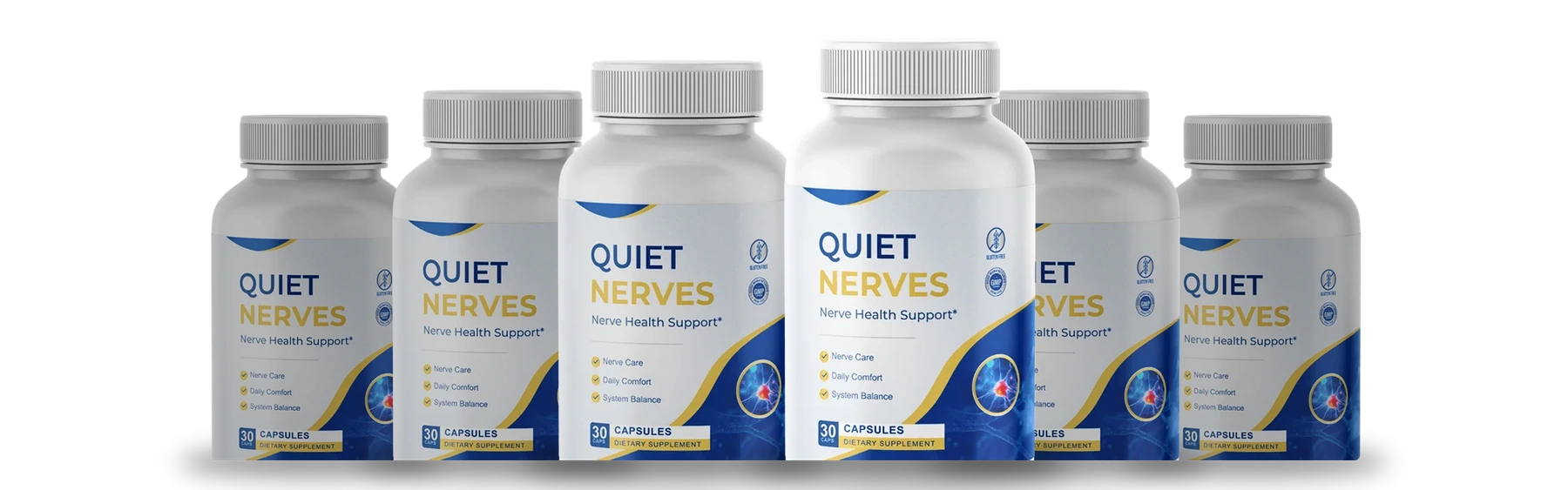
Quiet Nerves does not contain PEA (palmitoylethanolamide). Its six named ingredients are magnesium glycinate, alpha lipoic acid, butcher’s broom, L-carnitine, turmeric and coenzyme Q10, with a 60-day money-back guarantee on every pack.
See Quiet Nerves PackagesWhat to look for on a PEA label
- Does it state the particle grade?
Look for "micronized" or "ultramicronized." A label that only says "PEA" is hiding the one detail that matters most. The National Center for Complementary and Integrative Health’s guidance on dietary and herbal supplements applies here too.
- Is the amount stated clearly?
A specific milligram figure per serving beats a vague "comfort blend."
- Is it third-party tested?
Independent testing confirms both potency and purity, which matters for a fat-based ingredient.
- What is it paired with?
PEA works well beside antioxidants and B-vitamins. A thoughtful formula explains the combination rather than relying on PEA alone.
A quick myth to clear up
Because PEA touches the endocannabinoid-like system, it is sometimes confused with CBD. They are not the same. PEA is not derived from cannabis, contains no cannabinoids, and is a compound your own body already produces. It interacts with that system indirectly and gently, without the source or the regulatory questions attached to cannabis products. It is also not an omega-3 or omega-6 fatty acid, despite being fat-based — for those, see our guide to omega-3 for nerve health. Statements about PEA describe general and traditional use and are not a treatment for any condition.
How PEA compares with other nerve ingredients
It helps to see where PEA sits among the nutrients you may already know. Antioxidants such as alpha-lipoic acid protect nerve tissue from oxidative wear, and B-vitamins keep nerve signalling and myelin supplied — see our guide to B vitamins for nerve health. PEA adds a different dimension: it supports the body's own local comfort-and-balance response, which is why it is often grouped with the "calm and comfort" side of a nerve formula rather than the purely protective side. It complements those nutrients instead of duplicating them.
None of this replaces the foundations — a varied diet, sleep, movement and stress management remain the base of any nerve routine. Think of PEA as a specialised addition for the comfort side of the picture, not a stand-alone fix.
A note on quality and third-party testing
As with any supplement, quality varies, and with PEA the particle grade and purity are the two variables that decide whether you get value. Look for products made in a GMP-certified facility, ideally with third-party testing, and be wary of vague "proprietary blends" that hide how much PEA you are actually getting or what grade it is. A transparent label that states the particle size and the amount is a strong sign the rest of the product was made with the same care.
Where PEA fits in a nerve routine
Think of PEA as the body's own comfort regulator, working quietly alongside the protective and signalling nutrients in a nerve routine. The antioxidants handle oxidative protection, the B-vitamins and magnesium keep signalling supplied — see the best form of magnesium for nerve health — and PEA supports the local balance response. For the complete daily picture, including habits and sleep, start from the Quiet Nerves homepage or read how to support nerve health naturally.
What Quiet Nerves does contain
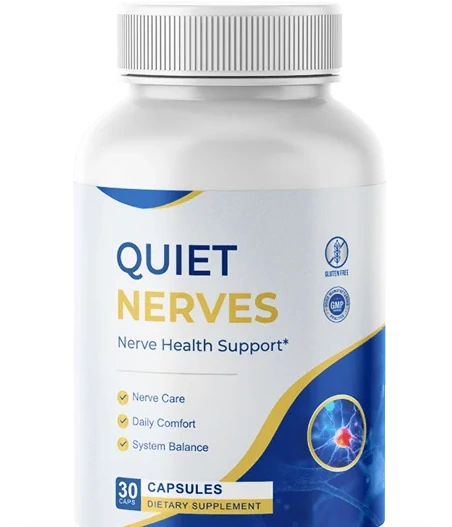
A once-daily capsule with six named ingredients and 60 days to decide whether it suits you.
Explore Quiet Nerves →Frequently Asked Questions
What is PEA and what does it do for nerves?
PEA, or palmitoylethanolamide, is a fatty-acid compound the body makes on its own, especially when cells are under stress. It belongs to a group called ALIAmides and is studied for helping the body regulate its own comfort and calming responses in nerve tissue. It is nutritional support that describes general and traditional use, not a treatment for any condition.
What is the difference between micronized and regular PEA?
PEA does not dissolve easily in water, so particle size affects how much your body can absorb. Micronized PEA (often labelled PEA-m) and ultramicronized PEA (PEA-um) are ground into much smaller particles to improve absorption. When comparing products, the micronized or ultramicronized form is generally preferred over standard non-micronized powder.
How much PEA is typically taken?
Studies commonly reference daily amounts around 600 to 1200 mg, sometimes started higher and then reduced, but the right amount for any individual should be discussed with a healthcare professional. PEA is generally taken with food and is often split into two doses across the day.
Is PEA the same as CBD or an omega fatty acid?
No. PEA is an endogenous fatty-acid amide that interacts with the body's own endocannabinoid-like system indirectly, but it is not CBD and does not come from cannabis, and it is not an omega-3 or omega-6 fatty acid. It is its own distinct compound produced naturally in the body and found in small amounts in foods such as egg yolk and soy.
What should I look for on a PEA label?
Look for the words micronized or ultramicronized, a clear milligram figure per serving, and third-party testing. A quality label states the particle grade rather than just PEA, because particle size is the main factor in how much you actually absorb.
References
- The pharmacology of palmitoylethanolamide and first data on the therapeutic efficacy of some of its new formulations (Br J Pharmacol, 2017)
- Palmitoylethanolamide for the treatment of pain: pharmacokinetics, safety and efficacy (Br J Clin Pharmacol, 2016)
- Palmitoylethanolamide, a naturally occurring disease-modifying agent in neuropathic pain (Inflammopharmacology, 2014)
- Dietary and Herbal Supplements (National Center for Complementary and Integrative Health)
About the Quietanerves Editorial Desk
The Quietanerves Editorial Desk writes this independent guide and checks every ingredient statement against the sources linked above. No doctor reviews it, and an article about an ingredient is not a statement about the Quiet Nerves capsule unless it says so. Speak to a healthcare professional about your own situation.
† These statements have not been evaluated by the FDA. This product is not intended to diagnose, treat, cure or prevent any disease. This article is for general information only and is not medical advice. Speak with your physician before starting any supplement, especially if you are pregnant, nursing, under 18 or taking medication.