Best Magnesium for Nerves and Muscles: Glycinate vs Oxide
| Why it matters | Magnesium helps regulate nerve signalling and muscle relaxation, and many everyday diets fall short. |
| Best-absorbed forms | Chelated forms like magnesium glycinate, citrate, malate and taurate beat oxide for absorption. |
| Gentlest option | Glycinate is prized for being easy on the stomach; oxide is the most likely to loosen it. |
| On the label | Look for the elemental magnesium amount and the specific form named — not just “magnesium.” |

Why magnesium is a cornerstone nerve mineral
If you are researching the best form of magnesium for nerve health, you have already found one of the most important minerals your nervous system relies on. Magnesium is a cofactor in more than three hundred enzyme reactions in the body, and several of them sit right at the heart of how nerves fire, rest and recover. It helps regulate the flow of calcium into nerve cells, supports healthy neurotransmitter balance, and plays a role in muscle relaxation — which is why it is so often nicknamed the “relaxation mineral.” Schwalfenberg and Genuis surveyed that enzymatic reach in Scientifica (2017).
Here is the catch that sends most people searching in the first place: magnesium comes in many different chemical forms, and they are not interchangeable. Two supplements can both say “magnesium” on the front of the label and yet deliver very different amounts of usable, absorbable mineral. Understanding the forms is the single most useful thing you can do before you buy, so this guide walks through each one, how much you actually need, and exactly what to look for on a label.
How magnesium supports the nervous system
At the cellular level, magnesium acts a little like a gatekeeper. Nerve cells send signals partly by moving calcium in and out, and magnesium helps keep that movement measured rather than runaway. It sits at the NMDA receptor — a key player in nerve signalling — where it helps prevent over-excitation. When magnesium is in short supply, that calming brake is weaker, which is part of why low magnesium is associated with feeling “wired,” restless or tense. Kirkland and colleagues reviewed the NMDA-receptor and signalling roles in Nutrients (2018).
Magnesium also supports energy production inside nerve cells, contributes to the healthy structure of the protective sheath around nerves, and works closely with vitamin B6 and potassium. It is genuinely a team player, which is one reason nerve-support formulas rarely include magnesium alone. If you want the bigger picture on how these nutrients fit together, our guide on how to support nerve health naturally puts magnesium in context with sleep, movement and diet.
The best form of magnesium for nerve health, compared
“Best” depends on two things: how well the form is absorbed, and how gently it treats your digestion. Here are the forms you will actually see on shelves. A randomised, double-blind comparison in Magnesium Research found citrate better absorbed than oxide, and it is the study most often cited on this point.
Magnesium glycinate (bisglycinate)
Magnesium bound to the amino acid glycine. This chelated form is widely regarded as one of the best-absorbed and gentlest on the stomach, and glycine itself has a calming reputation. For people whose main interest is evening calm and steadier nerves without a laxative effect, glycinate is often the first choice.
Magnesium citrate
Magnesium bound to citric acid. It is well absorbed and inexpensive, which makes it very common. At higher doses it has a mild laxative action — useful for some people, unwelcome for others. A sensible middle-ground form.
Magnesium malate
Bound to malic acid, a molecule involved in energy production. Well absorbed and often chosen by people who want daytime support without drowsiness.
Magnesium L-threonate
A newer form studied specifically for its ability to cross into the brain. It is more expensive and delivers less elemental magnesium per gram, but it is of particular interest for cognitive and nervous-system research.
Magnesium taurate
Bound to the amino acid taurine, which itself supports the nervous system and heart. A calm-friendly, well-tolerated option.
Magnesium oxide
The form to understand carefully. Oxide contains a lot of elemental magnesium by weight, but the body absorbs only a small fraction of it — studies routinely put its bioavailability far below the chelated forms. It is cheap, so it fills many bargain products. It works well as a short-term laxative; it is a poor choice if steady absorption for nerve support is your goal.

How much magnesium do you actually need?
The recommended dietary allowance for adults sits at roughly 310–420 mg of elemental magnesium per day from all sources, food included. Most people get a good share from leafy greens, nuts, seeds, legumes and whole grains, so a supplement is usually there to top up a gap rather than supply the whole amount. Both figures come from the NIH magnesium fact sheet for health professionals.
Two numbers matter on a label. The first is elemental magnesium — the actual amount of the mineral you absorb, not the weight of the whole compound. The second is the tolerable upper intake level for supplemental magnesium, which health authorities set at 350 mg per day for adults. That ceiling is about avoiding the digestive upset that comes from megadosing, not the magnesium in food. More is not better; steady and well-absorbed beats a big number on the front of the box.
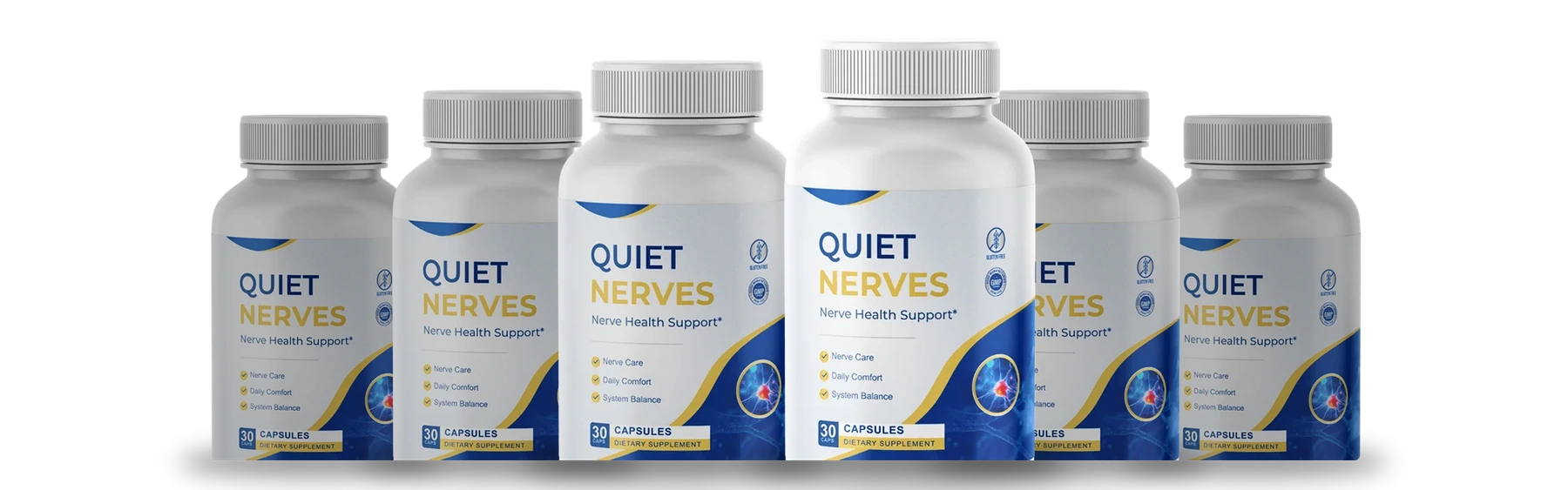
Quiet Nerves uses magnesium glycinate
Quiet Nerves is a once-daily capsule with six named ingredients: magnesium glycinate, alpha lipoic acid, butcher’s broom, L-carnitine, turmeric and coenzyme Q10. Every pack carries a 60-day money-back guarantee.
See Quiet Nerves PackagesHow to read a magnesium label
Put these five checks to any product before you buy:
- Find the form, not just the word
The label should name a specific form — glycinate, citrate, malate — not simply “magnesium.” A vague label often hides oxide.
- Look for elemental milligrams
Good labels state the elemental magnesium amount. If they only list the compound weight, you cannot tell how much you are really getting.
- Check the %DV
The percent Daily Value gives you a quick sense of how a serving stacks up against the roughly 420 mg reference.
- Notice the pairing
Magnesium works with B6 and other nutrients. A thoughtfully built formula tells you what it is paired with and why.
- Mind your tolerance
If you are sensitive to laxative effects, favour glycinate or malate over citrate and oxide.
Timing, pairing and everyday use
Magnesium is generally taken with food to be easy on the stomach, and many people prefer the evening because of its calming reputation. It pairs naturally with vitamin B6, which supports its use in the body — you can read more in our guide to B vitamins for nerve health. If you take certain medications (some antibiotics or thyroid medication, for example), magnesium can affect their absorption, so spacing them out and checking with your pharmacist is wise. Magnesium also has a hand in switching vitamin D into its active form, which we cover in vitamin D and nerve health.
For antioxidant nerve support that complements magnesium, many formulas add compounds like alpha-lipoic acid; our companion article on alpha-lipoic acid for nerve health explains how that piece fits. And for the whole daily routine — nutrients, calm and habits together — start from the Quiet Nerves homepage.
Putting it all together
The best form of magnesium for nerve health is the one your body actually absorbs and tolerates. For most people focused on calm and steadier nerves, that means a chelated form such as glycinate, with citrate, malate and taurate as strong alternatives, and oxide reserved for its laxative use rather than daily nerve support. Check the elemental amount, respect the 350 mg supplemental ceiling, and treat magnesium as one well-chosen part of a broader nerve-support routine rather than a magic bullet.
See the six Quiet Nerves ingredients
A once-daily capsule with six named ingredients and 60 days to decide whether it suits you.
Explore Quiet Nerves →Frequently Asked Questions
Which form of magnesium is best for nerve health?
For most people focused on calm and steady nerves, a well-absorbed chelated form such as magnesium glycinate is a strong first choice because it is gentle on digestion. Citrate, malate and taurate are good alternatives. Magnesium oxide is poorly absorbed and is better known as a short-term laxative than as a nerve-support form.
Is magnesium glycinate better than citrate?
Both are well absorbed. Glycinate tends to be gentler on the stomach and is often preferred for evening calm, while citrate is well absorbed but can have a mild laxative effect at higher doses. The best pick depends on your digestion and whether you want that laxative action or not.
How much magnesium should I take for nerves?
Adults need roughly 310 to 420 mg of elemental magnesium per day from all sources, food included, so a supplement usually tops up a gap rather than supplying it all. Health authorities set a tolerable upper limit of 350 mg per day for supplemental magnesium to avoid digestive upset. Look at the elemental amount on the label, not just the compound weight.
Can magnesium help me relax in the evening?
Magnesium supports healthy nerve signalling and muscle relaxation and is often nicknamed the relaxation mineral, which is why many people take a well-absorbed form such as glycinate in the evening. It is best thought of as everyday nutritional support, not a treatment or sleep medication.
Does magnesium oxide work at all?
Magnesium oxide contains a large amount of elemental magnesium by weight but the body absorbs only a small fraction of it, so it is an inefficient choice for steady nerve support. It is, however, effective and inexpensive as a short-term laxative, which is why it appears in many bargain products.
References
- Magnesium: Fact Sheet for Health Professionals (NIH Office of Dietary Supplements)
- The Importance of Magnesium in Clinical Healthcare (Scientifica (Cairo), 2017)
- The Role of Magnesium in Neurological Disorders (Nutrients, 2018)
- Mg citrate found more bioavailable than other Mg preparations in a randomised, double-blind study (Magnes Res, 2003)
About the Quietanerves Editorial Desk
The Quietanerves Editorial Desk writes this independent guide and checks every ingredient statement against the sources linked above. No doctor reviews it, and an article about an ingredient is not a statement about the Quiet Nerves capsule unless it says so. Speak to a healthcare professional about your own situation.
† These statements have not been evaluated by the FDA. This product is not intended to diagnose, treat, cure or prevent any disease. This article is for general information only and is not medical advice. Speak with your physician before starting any supplement, especially if you are pregnant, nursing, under 18 or taking medication.