B Vitamins for Nerve Health: B1, B6 and B12 Explained
| The nerve trio | B1 (thiamine), B6 and B12 are the classic nerve B-vitamins, with folate in a supporting role. |
| What they do | They support nerve energy, neurotransmitters and the myelin coating around nerves. |
| Absorption note | B12 gets harder to absorb with age; methylcobalamin is a ready-to-use form. |
| A caution | Very high long-term B6 has its own limits — more is not better; look for sensible amounts. |
Why B vitamins matter to your nerves
Ask a nutritionist which nutrients are most associated with nerves and the answer almost always includes the B vitamins for nerve health. This family of water-soluble vitamins works as a set of cofactors — the small helper molecules that let the body run the reactions behind nerve energy, neurotransmitter production and the upkeep of the myelin sheath, the fatty coating that lets nerves send signals cleanly. Calderon-Ospina and Nava-Mesa mapped how thiamine, pyridoxine and cobalamin act together in CNS Neuroscience & Therapeutics (2020).
Three members of the family do most of the heavy lifting for nerves: B1 (thiamine), B6 and B12. Folate (B9) plays a supporting role. Because these vitamins are water-soluble, the body does not store large reserves, so a steady daily supply matters — and because the form of each vitamin affects how well it is used, the label is worth reading closely.
B1 (thiamine): energy for nerve cells
Thiamine helps convert the food you eat into the energy nerve cells run on, and it plays a role in the healthy conduction of nerve signals. A shortfall is classically linked to nerve-related symptoms, which is why thiamine is a foundation nerve vitamin. Intake figures and deficiency signs are listed in the NIH thiamin fact sheet for health professionals.
One detail worth knowing: standard thiamine is water-soluble, but a fat-soluble derivative called benfotiamine is absorbed differently and is often favoured in nerve-specific formulas because it can reach tissues more readily. If a label lists benfotiamine, that is usually a sign the formula was designed with nerves in mind. We put the two forms side by side in our guide to benfotiamine vs thiamine for nerve health.
B6 (pyridoxine): the neurotransmitter vitamin — with a ceiling
Vitamin B6 is essential for making several neurotransmitters, the chemical messengers nerves use to communicate, and it partners with magnesium in many of those reactions — see our guide to the best form of magnesium for nerve health for that pairing. On a label you may see it as pyridoxine or as the “active” form pyridoxal-5-phosphate (P-5-P), which the body can use directly. That ceiling is not a scare story: the NIH vitamin B6 fact sheet records sensory nerve damage from sustained high-dose B6.
B6 comes with an important caveat that responsible formulas respect: unlike most water-soluble vitamins, very high intakes of B6 over long periods are not harmless. Health authorities set a tolerable upper intake level for adults at 100 mg per day, and sustained megadoses well above that have been linked to nerve issues of their own. The lesson is the same one that runs through this whole guide: with B6, sensible amounts beat heroic ones.

B12 (cobalamin): the myelin vitamin
If one vitamin is synonymous with nerves, it is B12. It is essential for maintaining the myelin sheath and for healthy nerve function, and a genuine shortfall can show up as nerve-related sensations. B12 is also the vitamin most likely to be low in specific groups: older adults (absorption declines with age), people on plant-based diets (B12 comes almost entirely from animal foods), and anyone whose stomach makes less of the “intrinsic factor” needed to absorb it. The NIH vitamin B12 fact sheet explains why absorption, rather than intake, is usually the problem in older adults and after bariatric surgery.
Form matters here too. Methylcobalamin is a naturally occurring, ready-to-use form, while cyanocobalamin is a stable synthetic form the body must convert. Both raise B12 levels; many nerve-focused formulas choose methylcobalamin because it needs no conversion step.
Folate (B9) and the methylation picture
Folate works hand in hand with B12 in a process called methylation, which supports healthy nerve and cellular function. On better labels you may see the active form methylfolate (5-MTHF) rather than plain folic acid, since a portion of the population converts folic acid less efficiently. Folate and B12 are best thought of as a pair.
Not in Quiet Nerves: B vitamins
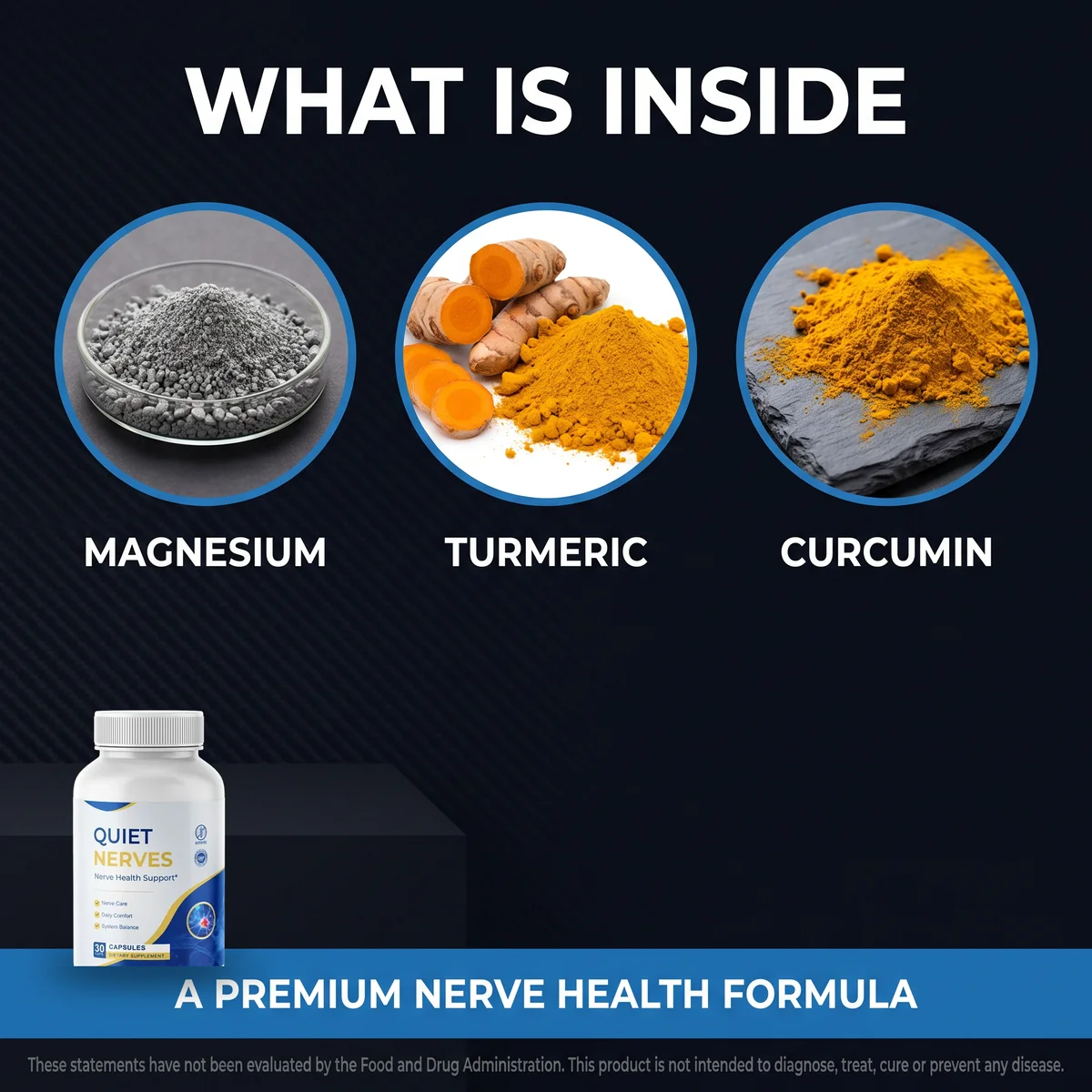
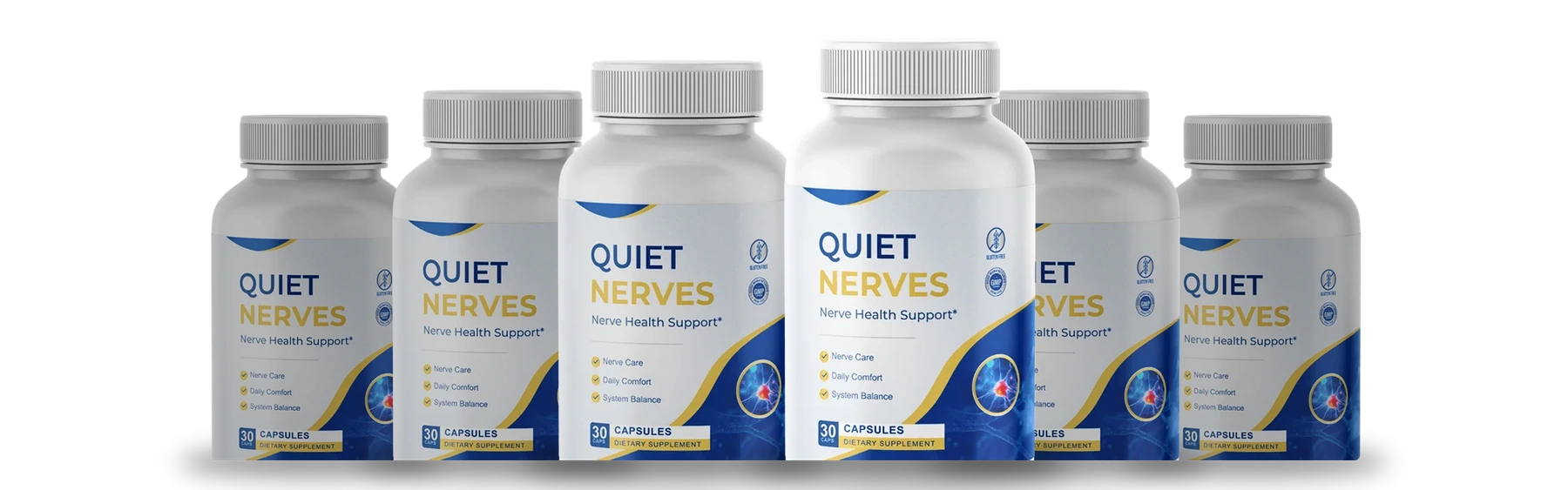
Quiet Nerves does not contain B vitamins. Its six named ingredients are magnesium glycinate, alpha lipoic acid, butcher’s broom, L-carnitine, turmeric and coenzyme Q10, with a 60-day money-back guarantee on every pack.
See Quiet Nerves PackagesHow to read a B-complex label
- Look for the nerve trio
B1, B6 and B12 should all be present and clearly listed — those are the core nerve B-vitamins.
- Check the forms
Active forms — methylcobalamin, P-5-P, methylfolate, benfotiamine — signal a formula built for absorption.
- Watch the B6 amount
More is not better. Sensible B6 that respects the 100 mg upper limit is a mark of a responsible product.
- See what it is paired with
B-vitamins work alongside minerals and antioxidants; a good formula explains the combination.
Food first, supplement to fill gaps
Whole foods remain the best foundation: whole grains and legumes for thiamine, poultry, fish, potatoes and bananas for B6, and animal foods such as meat, eggs and dairy for B12. A B-complex is there to cover the gaps a modern diet leaves — particularly for older adults and those eating little or no animal food. Even people who eat meat can fall short of B12 if absorption is reduced, so a supplement is not only for vegetarians.
Why the whole complex, not just one B vitamin
It is tempting to single out one vitamin — B12 gets most of the attention — but the B vitamins work as a coordinated team. Many share overlapping roles in energy metabolism and methylation, and taking a large dose of one in isolation can occasionally throw the balance off. This is why nerve-focused products usually supply a complex rather than a lone megadose. A well-built complex covers the trio that matters most for nerves while keeping each at a sensible level.
There is also a practical reason to favour the complex: the B vitamins are inexpensive to include, so leaving one out rarely saves meaningful cost and simply creates a gap. When you compare labels, a formula that lists B1, B6 and B12 together in active forms is usually a more thoughtful design than one that leans hard on a single “hero” vitamin.
A note on absorption over the years
Because B12 absorption naturally declines with age and lower stomach acid, older adults are a group for whom a supplemental B-complex is often especially relevant. The amount in food may be adequate, but the body's ability to extract it can quietly fall — another reason a steady daily top-up can make sense as the years add up.
Where B vitamins fit in a nerve routine
B vitamins handle the signalling and structural side of nerve support, magnesium keeps the calming and relaxation side in balance, and antioxidants like alpha-lipoic acid protect the tissue from everyday oxidative stress. Together with sleep, movement and diet — the subject of our guide on how to support nerve health naturally — they make a complete everyday routine. Quiet Nerves does not contain B vitamins; the homepage ingredient section lists what it does contain.
What Quiet Nerves does contain
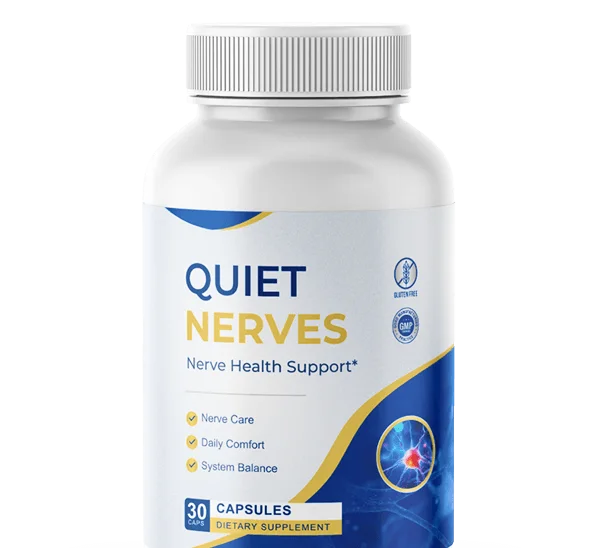
A once-daily capsule with six named ingredients and 60 days to decide whether it suits you.
Explore Quiet Nerves →Frequently Asked Questions
Which B vitamins are best for nerves?
The three classic nerve B-vitamins are B1 (thiamine), B6 and B12. B1 supports nerve energy, B6 helps make neurotransmitters, and B12 is essential for the myelin sheath and healthy nerve function. Folate (B9) plays a supporting role alongside B12 through methylation.
Is methylcobalamin better than cyanocobalamin?
Methylcobalamin is a naturally occurring, ready-to-use form of B12, while cyanocobalamin is a stable synthetic form the body must convert first. Both effectively raise B12 levels, but many nerve-focused formulas choose methylcobalamin because it needs no conversion step.
Can too much B6 be a problem?
Yes. Unlike most water-soluble vitamins, very high intakes of B6 over long periods are not harmless. Health authorities set a tolerable upper intake level of 100 mg per day for adults, and sustained megadoses well above that have been linked to nerve problems of their own, so sensible amounts are best.
Should I take B vitamins with food?
B vitamins are generally well tolerated and are commonly taken with food, which can also reduce the mild nausea some people feel on an empty stomach. Because they are water-soluble and not stored in large amounts, a steady daily intake matters more than the exact timing.
Do I need a B-complex if I eat meat?
Not necessarily, but you might. Even people who eat meat can fall short of B12 if absorption is reduced, which becomes more common with age or lower stomach acid. Plant-based eaters are at higher risk because B12 comes almost entirely from animal foods. A supplement is there to fill gaps that diet leaves.
References
- Vitamin B12: Fact Sheet for Health Professionals (NIH Office of Dietary Supplements)
- Vitamin B6: Fact Sheet for Health Professionals (NIH Office of Dietary Supplements)
- Thiamin: Fact Sheet for Health Professionals (NIH Office of Dietary Supplements)
- B Vitamins in the nervous system: Current knowledge of the biochemical modes of action and synergies of thiamine, pyridoxine, and cobalamin (CNS Neurosci Ther, 2020)
About the Quietanerves Editorial Desk
The Quietanerves Editorial Desk writes this independent guide and checks every ingredient statement against the sources linked above. No doctor reviews it, and an article about an ingredient is not a statement about the Quiet Nerves capsule unless it says so. Speak to a healthcare professional about your own situation.
† These statements have not been evaluated by the FDA. This product is not intended to diagnose, treat, cure or prevent any disease. This article is for general information only and is not medical advice. Speak with your physician before starting any supplement, especially if you are pregnant, nursing, under 18 or taking medication.