Ashwagandha vs L-Theanine for Calm: Which One Suits You?
| Ashwagandha | An adaptogenic root traditionally used to help the body handle everyday stress — it works over weeks. |
| L-Theanine | An amino acid from tea for calm, relaxed focus — often felt within an hour or two. |
| Timeline | Ashwagandha is a slow daily builder; theanine is more of an in-the-moment settler. |
| On the label | For ashwagandha look for a standardised root extract and % withanolides; for theanine, the L-form and mg. |

Meet the two calming ingredients
When people compare ashwagandha vs L-theanine, they are usually asking the same practical question: which one actually helps you feel calmer, and how? Both are staples of calm-focused supplements, both have a genuine research base, and both appear together in many nerve and stress formulas. But they work in very different ways and on very different timelines, so the “better” one really depends on what you are after.
In short: ashwagandha is a slow-and-steady daily builder — an adaptogenic herb you take consistently for weeks. L-theanine is more of an in-the-moment settler — an amino acid many people feel within an hour or two. Let us look at each mechanism, then compare them side by side and cover what to look for on a label.
How ashwagandha works
Ashwagandha (Withania somnifera) is a root used in traditional Ayurvedic practice for centuries. It is classed as an adaptogen — a term for plants traditionally used to help the body “adapt” to stress and return to balance. The compounds credited with its activity are a group called withanolides, which is why standardised extracts are described by their withanolide percentage. The National Center for Complementary and Integrative Health keeps a plain-language summary of the evidence and the cautions on its ashwagandha page.

Research suggests ashwagandha is used to support a healthy response to everyday stress, in part through its influence on the body's stress-signalling (the HPA axis) and cortisol rhythm. The key practical point is time: ashwagandha is not an on-demand effect. Studies typically run for several weeks, and most people give it a month or more of consistent daily use before judging it. It is a builder, not a switch.
Root vs leaf, and standardised extracts
Most of the well-known research uses root extract rather than leaf. On labels you will often see branded, standardised extracts such as KSM-66 (a root-only extract) or Sensoril (which includes leaf), each standardised to a stated withanolide percentage. A named, standardised extract tells you the maker cared about consistency.
How L-theanine works
L-theanine is an amino acid found naturally in tea leaves — it is a big part of why a cup of green tea can feel calming even with caffeine in it. Its signature is calm without sedation: it is associated with an increase in alpha brain-wave activity, the pattern linked to a relaxed-but-alert state, and it appears to modulate calming and excitatory signalling in the brain. Hidese and colleagues tested exactly this in a randomised controlled trial of L-theanine on stress-related symptoms in Nutrients.
Unlike ashwagandha, L-theanine tends to be felt relatively quickly — often within an hour or two — which is why it is popular for taking the edge off in the moment. It is also famous for pairing with caffeine: the two together are associated with focused, jitter-free attention, because theanine smooths caffeine's rough edges without cancelling its lift.
Ashwagandha vs L-theanine: side by side
- ✓ Type: ashwagandha is an adaptogenic herb; L-theanine is an amino acid.
- ✓ Onset: ashwagandha builds over weeks; L-theanine is often felt within an hour or two.
- ✓ Best use: ashwagandha for steady daily stress resilience; L-theanine for in-the-moment calm and focus.
- ✓ Feel: both aim for calm without heavy sedation; theanine is especially known for relaxed alertness.
- ✓ Pairs with caffeine: L-theanine famously does; ashwagandha is not used that way.
Not in Quiet Nerves: ashwagandha and L-theanine
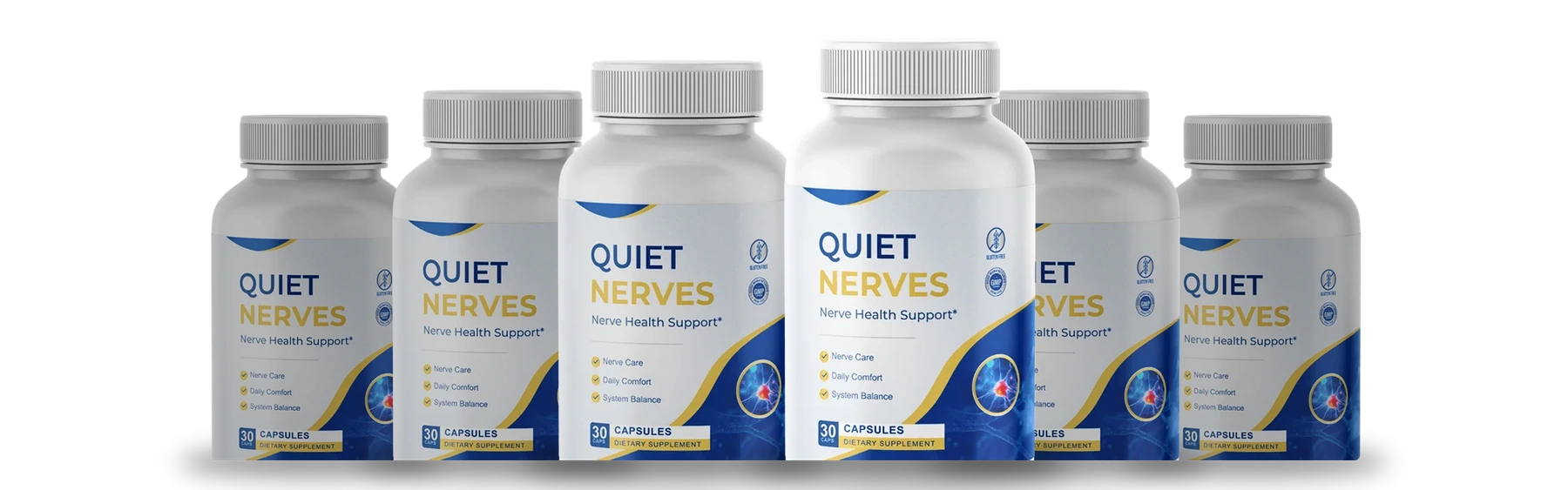
Quiet Nerves does not contain ashwagandha or L-theanine. Its six named ingredients are magnesium glycinate, alpha lipoic acid, butcher’s broom, L-carnitine, turmeric and coenzyme Q10, with a 60-day money-back guarantee on every pack.
See Quiet Nerves PackagesDo they work together?
This is the best part of the comparison: you rarely have to choose. Because ashwagandha and L-theanine work through different mechanisms and on different timelines, they are complementary. Ashwagandha gradually supports your baseline resilience to everyday stress, while L-theanine helps smooth the moment. That is why some calm-focused formulas feature both rather than picking a side. Quiet Nerves is not one of them: neither ingredient is on its list. Nobre and colleagues described the tea-derived, alertness-sparing character of L-theanine in Asia Pacific Journal of Clinical Nutrition (2008).
They also sit naturally alongside the mineral and vitamin side of nerve support. Magnesium, covered in our guide to the best form of magnesium for nerve health, has its own calming reputation, and the B vitamins for nerve health keep nerve signalling well supplied. Both are a more reliable starting point than the neurotransmitter itself, for reasons we set out in GABA supplements for calm.
What to look for on the label
- Ashwagandha: a standardised root extract
Look for a named extract (such as KSM-66 or Sensoril) and a stated withanolide percentage — not just “ashwagandha powder.”
- L-theanine: the mg per serving
Look for “L-theanine” specifically and a clear milligram amount, ideally the pure L-form.
- Give ashwagandha time
Because it builds over weeks, judge it on consistent daily use, not the first dose.
- Mind interactions
Adaptogens can interact with thyroid, sedative or blood-sugar medication — check with your doctor if that applies to you.
A note on quality, dosing and consistency
Two products can both list ashwagandha and L-theanine and still differ enormously. For ashwagandha, the difference usually comes down to whether it is a plain milled root or a concentrated, standardised extract — the latter delivers a defined level of the active withanolides batch after batch, which matters when the effect builds slowly over weeks. For L-theanine, purity and a clear milligram figure are what count; the pure L-form is what the research uses. A placebo-controlled ashwagandha trial published in Medicine in 2019 used a standardised root extract over sixty days.
Consistency of use matters just as much as consistency of the product. Ashwagandha in particular rewards a steady daily habit; skipping days undercuts the very mechanism that makes it work. Choosing a format you will actually take every day — a single capsule, say — often does more for real-world results than chasing the highest number on a label. And as always, look for a GMP-certified facility and, ideally, third-party testing.
Which might suit you?
If your goal is steady, everyday stress resilience that you build like a habit, ashwagandha is the classic choice. If you want something for relaxed focus you can feel more quickly — or a companion to your morning coffee — L-theanine fits. For most people the honest answer is “both,” which is why they so often share a capsule. For the whole routine, including sleep and movement, see how to support nerve health naturally or start at the Quiet Nerves homepage.
What Quiet Nerves does contain
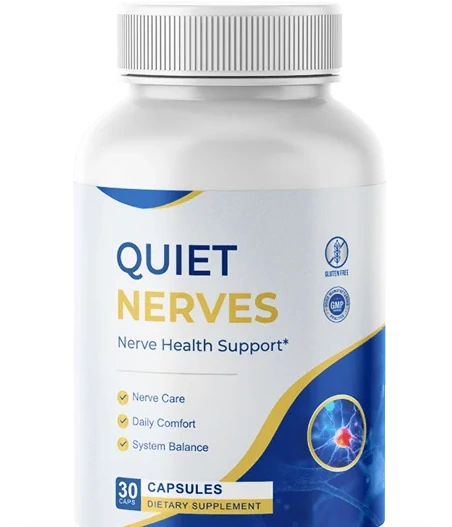
A once-daily capsule with six named ingredients and 60 days to decide whether it suits you.
Explore Quiet Nerves →Frequently Asked Questions
What is the difference between ashwagandha and L-theanine?
Ashwagandha is an adaptogenic root traditionally used to help the body adapt to everyday stress, and it works gradually over weeks. L-theanine is an amino acid from tea leaves associated with calm, relaxed focus that many people feel within an hour or two. One is a slow daily builder, the other an in-the-moment settler.
Can you take ashwagandha and L-theanine together?
Yes, they are commonly combined because they work through different mechanisms and on different timelines, making them complementary. Ashwagandha supports your baseline stress resilience while L-theanine helps smooth the moment, which is why many calm and nerve formulas include both. Check with your doctor if you take medication.
Which works faster for stress, ashwagandha or L-theanine?
L-theanine is typically felt faster, often within an hour or two, which is why it is popular for in-the-moment calm. Ashwagandha builds over several weeks of consistent daily use, so it is judged over time rather than by a single dose.
Does L-theanine make you sleepy?
L-theanine is known for calm without heavy sedation. It is associated with a relaxed-but-alert state and increased alpha brain-wave activity, and it famously pairs with caffeine for focused, jitter-free attention rather than drowsiness. Individual responses vary.
What should I look for on an ashwagandha label?
Look for a named, standardised root extract, such as KSM-66 or Sensoril, with a stated withanolide percentage, rather than plain ashwagandha powder. Most of the well-known research uses root extract, and a standardised percentage signals consistency from batch to batch.
References
- Ashwagandha (National Center for Complementary and Integrative Health)
- Effects of L-Theanine Administration on Stress-Related Symptoms and Cognitive Functions in Healthy Adults: A Randomized Controlled Trial (Nutrients, 2019)
- An investigation into the stress-relieving and pharmacological actions of an ashwagandha (Withania somnifera) extract: A randomized, double-blind, placebo-controlled study (Medicine (Baltimore), 2019)
- L-theanine, a natural constituent in tea, and its effect on mental state (Asia Pac J Clin Nutr, 2008)
About the Quietanerves Editorial Desk
The Quietanerves Editorial Desk writes this independent guide and checks every ingredient statement against the sources linked above. No doctor reviews it, and an article about an ingredient is not a statement about the Quiet Nerves capsule unless it says so. Speak to a healthcare professional about your own situation.
† These statements have not been evaluated by the FDA. This product is not intended to diagnose, treat, cure or prevent any disease. This article is for general information only and is not medical advice. Speak with your physician before starting any supplement, especially if you are pregnant, nursing, under 18 or taking medication.