GABA Supplements for Calm: How GABA Works and What to Look For
| What it is | Gamma-aminobutyric acid — the body's main inhibitory neurotransmitter, the “brake” on nerve signalling. |
| Why calm | GABA dials down over-active nerve signalling, which is why it is linked with relaxation and settled evenings. |
| The catch | There is debate over how well oral GABA crosses into the brain; it may act via the gut-brain axis instead. |
| On the label | Check the amount and type; formulas that also supply L-theanine, magnesium and B6 support your own GABA. |
What GABA actually is
GABA supplements for calm are everywhere, but what most labels never explain is what GABA is or whether swallowing it actually does what the bottle implies. GABA — gamma-aminobutyric acid — is the body's main inhibitory neurotransmitter. If the nervous system has an accelerator (the excitatory messenger glutamate), GABA is the brake. Its job is to quiet down over-active nerve signalling, which is why it is so strongly associated with feelings of calm, relaxation and settled evenings. Boonstra and colleagues summarise that inhibitory role in Frontiers in Psychology (2015).
Because that role is so appealing, GABA is sold widely as a standalone supplement. The science, though, has a genuinely interesting wrinkle that every shopper should understand before buying — and it revolves around a border crossing called the blood-brain barrier.
How GABA works in the body
Inside the brain, GABA binds to receptors — chiefly the GABA-A receptors — and dials down the excitability of nerve cells. This is the same calming system that many relaxation-focused compounds interact with, one way or another. When GABA signalling is working smoothly, the result is the sense of being able to downshift rather than staying stuck in high gear. The body makes its own GABA from the amino acid glutamate, a reaction that depends on nutrient cofactors — vitamin B6 in particular — which is one reason B-vitamins turn up in calm-focused formulas. Our guide to B vitamins for nerve health covers that cofactor role in more detail.
The blood-brain barrier question
Here is the honest, important part. The brain is protected by the blood-brain barrier, a highly selective border that controls which molecules get in. There is longstanding scientific debate about how well oral GABA crosses that barrier, and much of the evidence suggests it does not enter the brain in large amounts. So how might a GABA supplement still be linked with calm? This is the sticking point that the same Frontiers in Psychology review treats at length, and it is still unresolved.
The leading explanation points to the gut. Your digestive tract is lined with its own vast network of nerves — the enteric nervous system, sometimes called the “second brain” — which is rich in GABA receptors and communicates with the brain along the gut-brain axis, largely via the vagus nerve. In this view, oral GABA may act on that peripheral system and send calming signals upward, rather than flooding the brain directly. It is an area of ongoing research, and the takeaway is one of realistic expectations rather than dramatic claims.
GABA vs the nutrients that support it naturally
Because the direct-GABA route is uncertain, many well-designed calm formulas take a different approach: instead of (or alongside) raw GABA, they supply the ingredients that support the body's own GABA activity. Vitamin B6, for instance, is the cofactor for the enzyme that makes GABA, as the Linus Pauling Institute’s vitamin B6 article describes. Three come up repeatedly:
- ✓ L-theanine, the calm-focus amino acid from tea, is associated with a relaxed-but-alert state and is thought to influence GABA and related calming pathways.
- ✓ Magnesium interacts with the same GABA-A receptor system and is a classic relaxation mineral.
- ✓ Vitamin B6 is a cofactor the body uses to make GABA from glutamate in the first place.
This is why comparing a lone GABA pill with a thoughtfully built calm blend is not really apples to apples. If you are weighing up the calming actives specifically, our guide to ashwagandha vs L-theanine for calm breaks down two of the most popular options and how they differ.
Not in Quiet Nerves: GABA and calming aminos
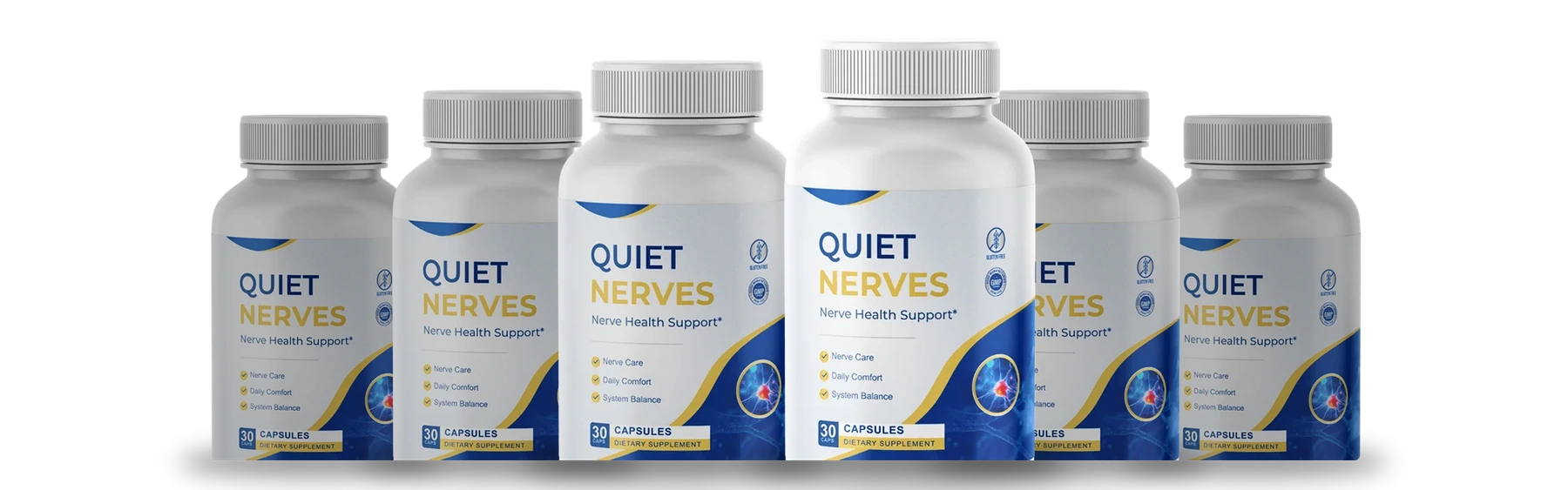
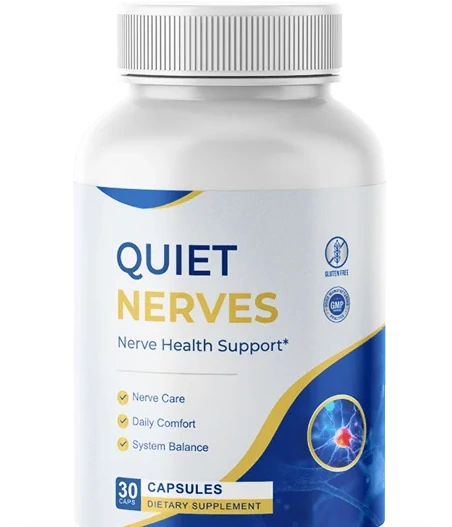
Quiet Nerves does not contain GABA, L-theanine or ashwagandha. Its six named ingredients are magnesium glycinate, alpha lipoic acid, butcher’s broom, L-carnitine, turmeric and coenzyme Q10, with a 60-day money-back guarantee on every pack.
See Quiet Nerves PackagesWhat to look for on a GABA (or calm) label
- Is the GABA amount stated, and which type?
Look for a clear milligram figure. Some products specify a naturally fermented GABA (such as PharmaGABA) rather than a synthetic one.
- Does the formula support your own GABA?
Ingredients like L-theanine, magnesium and vitamin B6 support the body's natural calming chemistry, which sidesteps the absorption debate.
- Are the claims realistic?
Be wary of dramatic promises. Calm support is gentle and general — not a sedative and not a treatment for any condition.
- GMP and third-party testing?
A GMP-certified facility and independent testing are reassuring signs of a quality product.
Setting realistic expectations for calm support
The honest framing for any calm-focused supplement is that it is a gentle nudge, not an off switch. GABA and the nutrients that support it are meant to help the nervous system downshift, and that effect is usually subtle and cumulative rather than dramatic. It also works best when the rest of your routine is pulling in the same direction: a consistent wind-down before bed, limiting late caffeine, some daily movement and a regular sleep schedule all give a calm supplement a fair chance to help. No capsule can out-muscle a chaotic routine, and none should be expected to. Hepsomali and colleagues found the human evidence thin and the studies small in their systematic review of oral GABA on stress and sleep.
It is equally important to know when a supplement is the wrong tool. Persistent anxiety, panic or sleep problems that disrupt daily life are reasons to speak with a healthcare professional rather than to keep raising a supplement dose. Calm support belongs in the category of everyday wellbeing habits — alongside good sleep hygiene and stress management — not as a substitute for medical care when it is genuinely needed.
Where GABA support fits in a nerve routine
Think of the calm side of nerve health as a system, not a single molecule. Whether you take GABA directly or feed the nutrients your body uses to make and respond to it, the goal is the same: a nervous system that can downshift. Magnesium is a cornerstone here — see our guide to the best form of magnesium for nerve health — working alongside calming aminos and adaptogens. For the complete daily picture, including sleep and habits, start from the Quiet Nerves homepage.
What Quiet Nerves does contain
A once-daily capsule with six named ingredients and 60 days to decide whether it suits you.
Explore Quiet Nerves →Frequently Asked Questions
What does GABA do in the body?
GABA (gamma-aminobutyric acid) is the body's main inhibitory neurotransmitter — the brake that quiets over-active nerve signalling. It binds to receptors, chiefly GABA-A receptors, and dials down the excitability of nerve cells, which is why it is associated with calm, relaxation and settled evenings. It is nutritional support, not a treatment for any condition.
Do GABA supplements actually cross into the brain?
This is debated. The brain is protected by the blood-brain barrier, and much of the evidence suggests oral GABA does not enter the brain in large amounts. A leading explanation is that GABA may act on the enteric nervous system in the gut, which is rich in GABA receptors, and send calming signals along the gut-brain axis. Realistic expectations are wise.
What is the difference between taking GABA and taking L-theanine or magnesium?
Raw GABA aims to supply the neurotransmitter directly, though how much reaches the brain is uncertain. L-theanine, magnesium and vitamin B6 instead support the body's own GABA activity — B6 is a cofactor for making GABA, and magnesium interacts with the same receptor system. Many calm formulas favour this indirect route because it sidesteps the absorption debate.
Is there a best form of GABA to look for?
Some products specify a naturally fermented GABA, such as PharmaGABA, rather than a synthetic version, and a good label states a clear milligram amount. Just as important is whether the formula also includes ingredients that support your own calming chemistry, and whether it is made in a GMP-certified facility with third-party testing.
Is GABA a sedative?
No. GABA sold as a supplement is intended as gentle, general calm support, not a sedative or sleeping pill, and it is not a treatment for any condition. Be cautious of products making dramatic promises. If you are pregnant, nursing, under 18 or taking medication, speak with a healthcare professional before starting any calm supplement.
References
- Neurotransmitters as food supplements: the effects of GABA on brain and behavior (Front Psychol, 2015)
- Effects of Oral Gamma-Aminobutyric Acid (GABA) Administration on Stress and Sleep in Humans: A Systematic Review (Front Neurosci, 2020)
- Vitamin B6 (Linus Pauling Institute, Micronutrient Information Center)
- Dietary and Herbal Supplements (National Center for Complementary and Integrative Health)
About the Quietanerves Editorial Desk
The Quietanerves Editorial Desk writes this independent guide and checks every ingredient statement against the sources linked above. No doctor reviews it, and an article about an ingredient is not a statement about the Quiet Nerves capsule unless it says so. Speak to a healthcare professional about your own situation.
† These statements have not been evaluated by the FDA. This product is not intended to diagnose, treat, cure or prevent any disease. This article is for general information only and is not medical advice. Speak with your physician before starting any supplement, especially if you are pregnant, nursing, under 18 or taking medication.